
 EN
EN
2-Deoxy-D-Ribose Sourcing for Enzyme Production Scales
When enzyme production facilities plan their raw material procurement, the selection and sourcing of 2-Deoxy-D-Ribose becomes one of the most consequential decisions across the supply chain. 2-Deoxy-D-Ribose is a five-carbon deoxysugar that serves as a critical substrate and biochemical building block in nucleoside analog synthesis, coenzyme pathway research, and a range of enzymatic assay systems. As production scales grow from laboratory bench work to pilot and full commercial manufacturing, the sourcing requirements for 2-Deoxy-D-Ribose shift considerably in terms of volume, purity specification, lead time, and quality documentation. Understanding those shifts in advance is what separates an efficient enzyme production program from one plagued by material shortfalls and quality deviations.
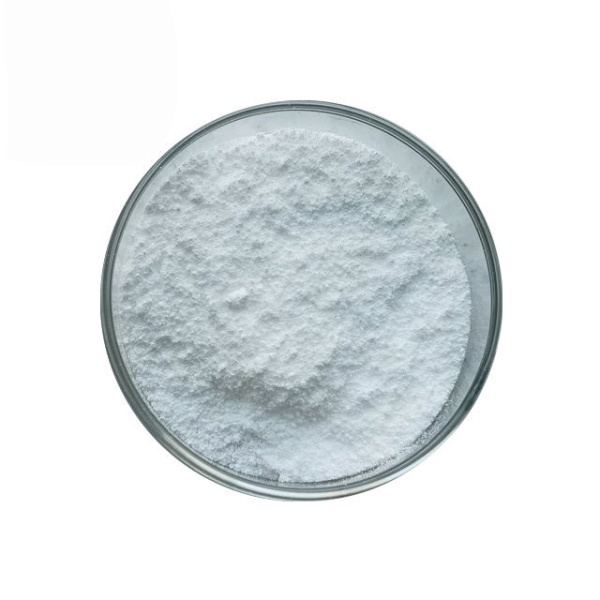
This article addresses the practical sourcing considerations that enzyme manufacturers and biochemical producers must evaluate when procuring 2-Deoxy-D-Ribose across different production scales. From small-scale discovery phases where a few grams of 2-Deoxy-D-Ribose are sufficient, to large-batch commercial runs requiring kilogram quantities, each stage demands a distinct procurement approach. The goal here is to provide actionable guidance so that sourcing managers, biochemists, and supply chain professionals can make well-informed decisions about 2-Deoxy-D-Ribose supply without compromising enzyme process integrity or project timelines.
Purity and Specification Requirements for 2-Deoxy-D-Ribose
Why Purity Grade Matters at Every Scale
The purity of 2-Deoxy-D-Ribose has a direct and measurable impact on enzyme reaction efficiency, yield reproducibility, and downstream product quality. In enzyme production applications, even trace-level impurities in 2-Deoxy-D-Ribose can inhibit enzymatic activity, interfere with cofactor binding, or introduce unwanted side reactions that complicate purification. For research-scale use, a purity of 98% may be acceptable for initial screening assays. However, as enzyme production scales up toward pilot or commercial manufacturing, sourcing teams must prioritize 2-Deoxy-D-Ribose with purity levels at or above 99%, supported by comprehensive certificates of analysis covering optical rotation, residual solvents, heavy metals, and microbial load. These specifications are not simply regulatory requirements but are essential inputs for process consistency.
Documentation and Regulatory Alignment
Sourcing 2-Deoxy-D-Ribose for enzyme production at regulated scales requires that suppliers provide robust documentation packages. This includes batch-specific certificates of analysis, safety data sheets, and traceability records that allow enzyme manufacturers to demonstrate raw material compliance during audits. When 2-Deoxy-D-Ribose is incorporated into GMP-adjacent or GMP-compliant workflows, the documentation standard rises accordingly. Suppliers of 2-Deoxy-D-Ribose who understand the enzyme production environment will proactively offer HPLC purity data, NMR confirmation of structure, and optical rotation values that validate the compound identity. Establishing these expectations clearly at the procurement stage avoids costly re-qualification later when production volumes increase.
Volume Scaling and Supply Chain Strategy for 2-Deoxy-D-Ribose
Transitioning from Gram to Kilogram Quantities
One of the most common sourcing challenges in enzyme production is the transition from laboratory-scale procurement of 2-Deoxy-D-Ribose to bulk quantities required for pilot and commercial batches. At the research stage, 2-Deoxy-D-Ribose is typically sourced in quantities ranging from one gram to one hundred grams, often from catalog suppliers with relatively short lead times. As enzyme production scales advance, demand for 2-Deoxy-D-Ribose can quickly reach five hundred grams, one kilogram, or even multi-kilogram lots per manufacturing cycle. At these volumes, catalog sourcing becomes impractical due to price inefficiency and inconsistent batch availability. Engaging with producers who specialize in industrial-scale supply of 2-Deoxy-D-Ribose becomes necessary, and long-term supply agreements with defined quality standards offer better protection against supply disruption.
Lead Time Planning and Safety Stock for 2-Deoxy-D-Ribose
Lead times for 2-Deoxy-D-Ribose vary significantly depending on order volume and supplier production capacity. For standard catalog quantities, 2-Deoxy-D-Ribose shipments may be available within one to two weeks. For custom or bulk lots of 2-Deoxy-D-Ribose exceeding one kilogram, production and testing cycles can extend lead times to six to twelve weeks. Enzyme production programs that depend on 2-Deoxy-D-Ribose as a key raw material should incorporate safety stock buffers and rolling procurement schedules to prevent production halts. Establishing a dual-sourcing strategy for 2-Deoxy-D-Ribose — qualifying a secondary supplier alongside the primary one — provides meaningful risk mitigation, particularly for programs with continuous or semi-continuous enzyme manufacturing demands.
Supplier Evaluation for 2-Deoxy-D-Ribose Procurement
Key Criteria for Qualifying 2-Deoxy-D-Ribose Suppliers
Selecting the right supplier for 2-Deoxy-D-Ribose is not solely about unit price. Enzyme production teams must assess supplier capability across several dimensions. First, the supplier must demonstrate consistent batch-to-batch quality for 2-Deoxy-D-Ribose, supported by internal quality management systems and independent third-party testing. Second, the supplier should have scalable production capacity for 2-Deoxy-D-Ribose, meaning they can fulfill both current and anticipated future order volumes without quality compromise. Third, technical support matters — a qualified 2-Deoxy-D-Ribose supplier should be able to discuss specification customization, packaging formats, and stability data relevant to your enzyme production environment. Price negotiations on 2-Deoxy-D-Ribose should occur only after these capability criteria are confirmed, not before.
Stability, Packaging, and Storage of 2-Deoxy-D-Ribose
2-Deoxy-D-Ribose has defined stability characteristics that must be respected throughout the supply chain. As a hygroscopic compound, 2-Deoxy-D-Ribose requires packaging that protects against moisture uptake during transit and storage. For larger procurement volumes, 2-Deoxy-D-Ribose is typically supplied in sealed, nitrogen-flushed containers with desiccant inserts to preserve integrity. Storage conditions of 2-Deoxy-D-Ribose at cool, dry environments between two and eight degrees Celsius are generally recommended to maintain purity over the intended shelf life. Enzyme manufacturers should review the stability data provided by suppliers and align storage protocols within their facilities accordingly. Failure to handle 2-Deoxy-D-Ribose correctly after receipt can degrade the material and compromise enzyme reaction outcomes regardless of initial purity.
FAQ
What purity level of 2-Deoxy-D-Ribose is recommended for enzyme production?
For most enzyme production applications, 2-Deoxy-D-Ribose with a purity of 99% or above is recommended. Higher purity grades of 2-Deoxy-D-Ribose reduce the risk of enzyme inhibition and improve batch-to-batch reproducibility. Always request a certificate of analysis from your supplier before committing to large-volume 2-Deoxy-D-Ribose purchases.
How should 2-Deoxy-D-Ribose be stored after procurement?
2-Deoxy-D-Ribose should be stored in a cool, dry environment, ideally between two and eight degrees Celsius, in tightly sealed containers away from moisture and light. Properly stored 2-Deoxy-D-Ribose retains its purity and structural integrity for the duration of its stated shelf life. Always verify storage conditions with your supplier at the time of 2-Deoxy-D-Ribose procurement.
When should enzyme manufacturers consider dual sourcing for 2-Deoxy-D-Ribose?
Enzyme manufacturers should consider dual sourcing for 2-Deoxy-D-Ribose as soon as their production scale moves beyond the laboratory stage. Once 2-Deoxy-D-Ribose becomes a critical raw material in pilot or commercial enzyme manufacturing, relying on a single supplier creates unacceptable supply chain risk. Qualifying a secondary supplier for 2-Deoxy-D-Ribose in parallel with the primary source ensures continuity and supports long-term production resilience.