 EN
EN
Overcoming the Water Solubility Bottleneck of Urolithin A: A Formulation Guide for Liquid Beverage Development
As functional beverages continue to gain momentum within the health and anti-ageing market,Urolithin A has emerged as one of the most sought-after active ingredients. Driven by extensive research into mitochondrial health and cellular rejuvenation, brands and formulators are keen to incorporate this ingredient into liquid product formats.
However, formulators encountera fundamental technical bottleneckthat Urolithin A is insoluble in water.
If you aim to develop clear RTD beverages or stable liquid supplements containingUrolithin A, poor water solubility can lead to formulation failure, accompanied by issues including phase separation, active ingredient precipitation and lowered bioavailability. Accordingly, sourcing pre-processed raw materials from a professionalurolithin a supplierserves as the primary prerequisite for a successful project.
The article introduces two problems that why does urolithin A pose water solubility challengesandhow do advanced formulation technologies successfully tackle this challenge?
Why is urolithin A insoluble in water?
From a chemical perspective, urolithin A-whether synthetically manufactured or naturally sourced-exhibits inherently low water solubility owing to its molecular structure:
First, it possesses hydrophobic polycyclic aromatic framework. Its molecular backbone possesses a largeconjugated aromatic ring systemthat forms a rigid planar architecture consisting of a benzocoumarin (coumarin lactone) backbone bearing phenolic hydroxyl substituents. This molecular arrangement generates strong intermolecular interactions predominantly π-π stacking forces. Therefore,itisdifficult for water molecules to disrupt these interactions and form a stable hydration shell.
Second, it lacks steric advantages for its hydrophilic groups. While it contains several phenolic hydroxyl groups, the overall hydrophobicity (lipophilicity) ofurolithinapowderoutweighs its hydrophilicity when viewed as a complete molecule. For this reason, it cannot form sufficient hydrogen bonds with water to attain adequate solubility.
In conclusion, during human digestion, active substances need to be fully dissolved in the aqueous phase before urolithin A can be absorbed by intestinal epithelial cells. Hence, ifurolithin a bulk powder, which is poorly soluble in water, is added directly to water-based formulations, urolithin A will not only precipitate within the beverage, but also reduce its oral bioavailability.
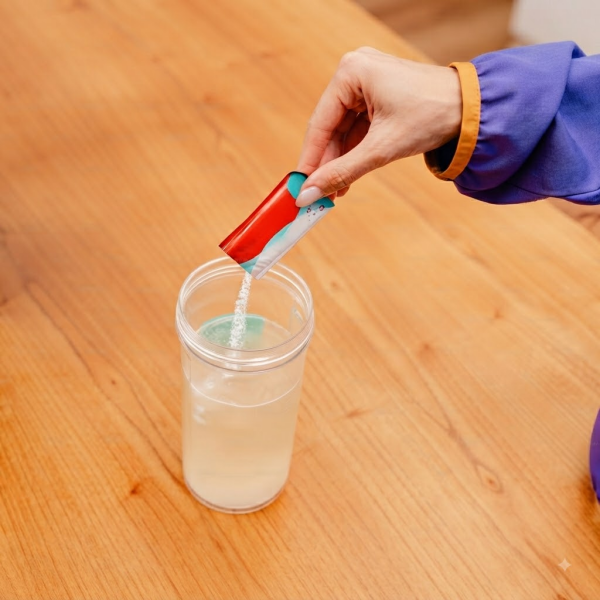
There are some problems of urolithin A “poor solubility” forliquid beveragedevelopment.
Urolithin A possesses hydrophobic polycyclic aromatic framework, and its molecular arrangement generates strong intermolecular interactions, and lacks steric advantages for its hydrophilic groups. For these reasons,urolithin a bulk powderdelivers extremely lowaqueous solubilityand is difficult to maintain uniform concentrationin water-based beverage.
1.If urolithin a powder is added directly to beverage bases, it will rapidly precipitate and settle to the bottom of the bottle owing to incomplete, uneven dissolution. This method not only ruins the visual presentation of the product, but also prevents consumers from receiving an accurate dosage per serving.
2.In the gastrointestinal tract, only by fully dissolving in the liquid phase can active ingredients traverse the intestinal barrier efficiently and be absorbed by cells. However, the poor water solubility directly undermines oral bioavailability and product efficacy.
How to solvethe solubility problem ofurolithin a powder?
To overcome aqueous solubility barriers without modifying the active molecule, modern formulation sciencebegins to usemolecular inclusion techniquesincluding the most popular technology ishydroxypropyl-β-cyclodextrin (HP-β-CD).
Mechanismofcyclodextrin inclusion complexatio:
1. It is aclass of cyclic oligosaccharideswith ahydrophilic exterior and a hydrophobic interior cavity.
2. The lipophilicurolithin Amolecule fits snugly within the hydrophobic interior ofthecyclodextrin, formingforming a stable inclusion complex.
3. Itsexteriorpart can work well with water, as a result, theapparent solubility and dispersibilityof urolithin A are significantly improved inliquid formulations.
Advantages of cyclodextrin inclusion forurolithin A:
There are somecommercial and technical benefitsby usingcyclodextrin inclusionforurolithin A in beverage production.
1. It preventslumping, phase separation, or precipitation of the active ingredient in the beverageandimprovesproduct clarity and visual appeal.
2. In the gastrointestinal tract, urolithin A delivers excellent dispersibility with the help ofcyclodextrin inclusiontechnology. As a result, it can be absorbed efficiently by human bodies and its bioavailability is also improved significantly.
3. It overcomes the problem of productstratification, ensuringstratification.
4.It complies with modern food and supplement safety standards, enabling a seamless transition from laboratory-scale work to commercial production.
When developing products, engaging urolithin a supplierwho can provide technical guidance is crucial, as this directly influences the formulation quality of liquid beverages. Overcoming the water solubility challenge is the first step toward creating market-leading functional beverages. If you require technical support, contact our technical team now.