Q1: What is AOS commonly used to replace? What is its main advantage?
A: It is often used as an ideal substitute or upgraded ingredient for conventional sulphate surfactants such as SLS (sodium lauryl sulphate) and SLES (sodium laureth sulphate).
The key highlight is that compared with conventional SLES, it provides powerful cleansing power and abundant foam volume and is often promoted by brands in "Sulfate-Free" formulations, catering to current consumer demand for gentle, non-irritating washing and care trends.
Q2: What effects does adding AOS bring to shampoo formulations?
A: In the aspect of oil control and volume boost, it thoroughly removes excess sebum secreted by the scalp and styling product residue from the scalp. After washing, your hair strands stay distinctly separated for natural airy texture, making it ideal for oily hair, limp fine hair, or anti-dandruff, deep-cleansing shampoos formulated for oil control.
It can reduce slippery residue. Compared with some high-molecular or silicone-heavy systems, AOS delivers a refreshing, clean residue-free sensation on the scalp and hair post-wash.
Q3: What precautions apply to AOS during production and formulation?
System Viscosity Tuning: As an anionic surfactant, it can be thickened with conventional inorganic salts such as sodium chloride. Its viscosity exhibits a peak value in response to salt concentration. Once past this critical point, excessive salt will trigger a dramatic viscosity decline and thin the system accordingly. Precise control over electrolyte dosage is therefore required during viscosity adjustment.
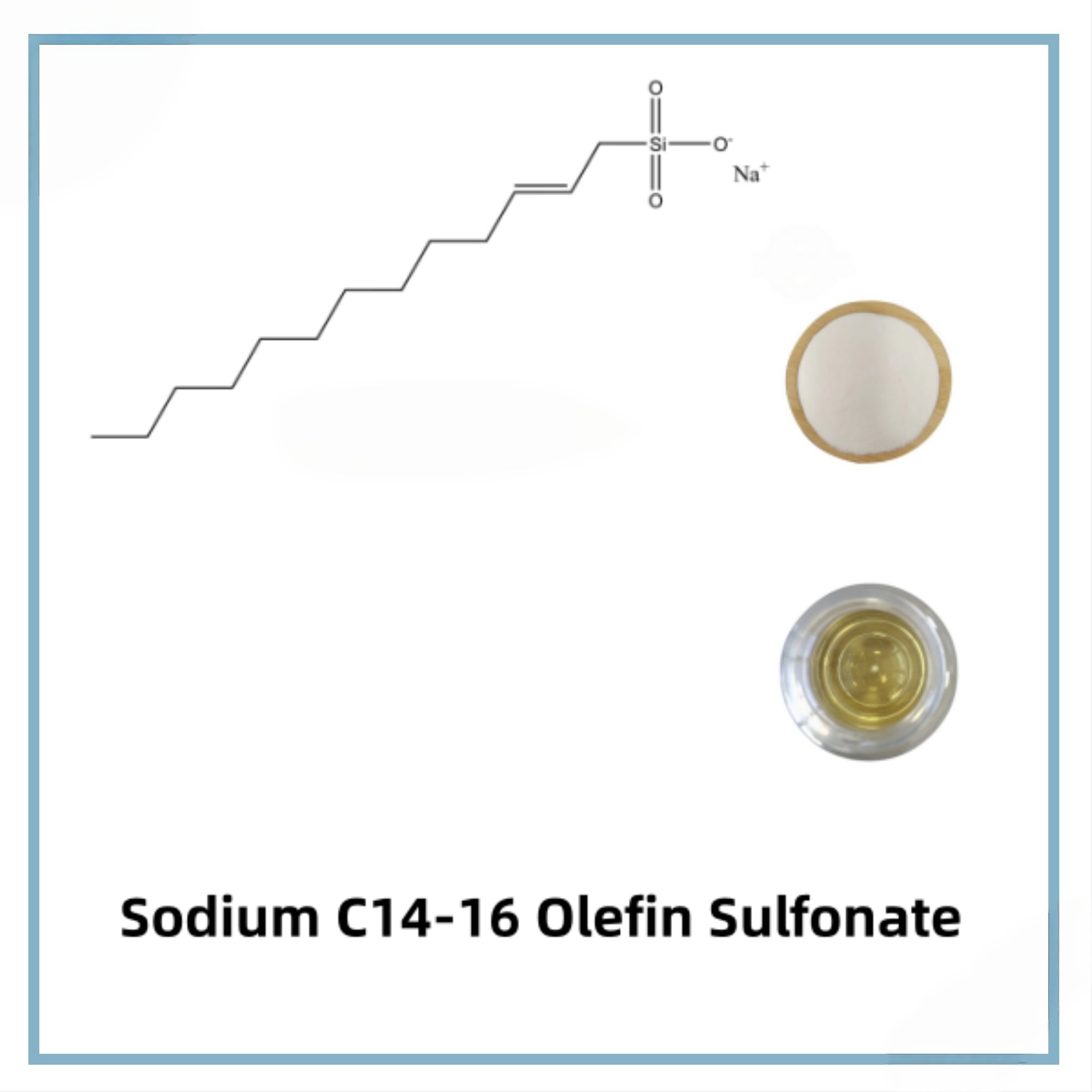
Multiple Physical Forms Available: Commercial grades are commonly supplied as liquid (typically 38% to 40% active content) or powder. Select the appropriate form according to your plant’s mixing vessel processes. For example, liquid variants offer easier handling, while powders are better suited for anhydrous formulations or applications demanding strict control over total solids.
Q4: How does AOS perform in terms of environmental protection and sustainability?
A: It delivers outstanding performance and excellent biodegradability. It can be readily broken down by microorganisms in nature without accumulating in water bodies. Therefore, it meets stringent environmental requirements for raw materials set by modern clean beauty and green personal care sectors, which makes it widely favoured in eco-friendly detergent and hair and body care markets worldwide.
Q5: How does AOS perform under hard water conditions? Will hard water impair its foaming and cleansing effects?
A: It is very good. Compared with conventional soap, such as sodium fatty acid salts, which readily form calcium soap precipitates in hard water, resulting in a sharp reduction in foam. By contrast, Sodium C14-16 olefin sulfonate is different from them. It delivers high tolerance to hard-water ions such as calcium and magnesium.
For both soft and hard water, it can maintain stable, abundant and fine foam, and consistent cleansing efficiency. For this reason, it delivers stable performance within varied water conditions across regions.

 EN
EN