Q1: What is the typical usage level of Allantoin in cosmetics?
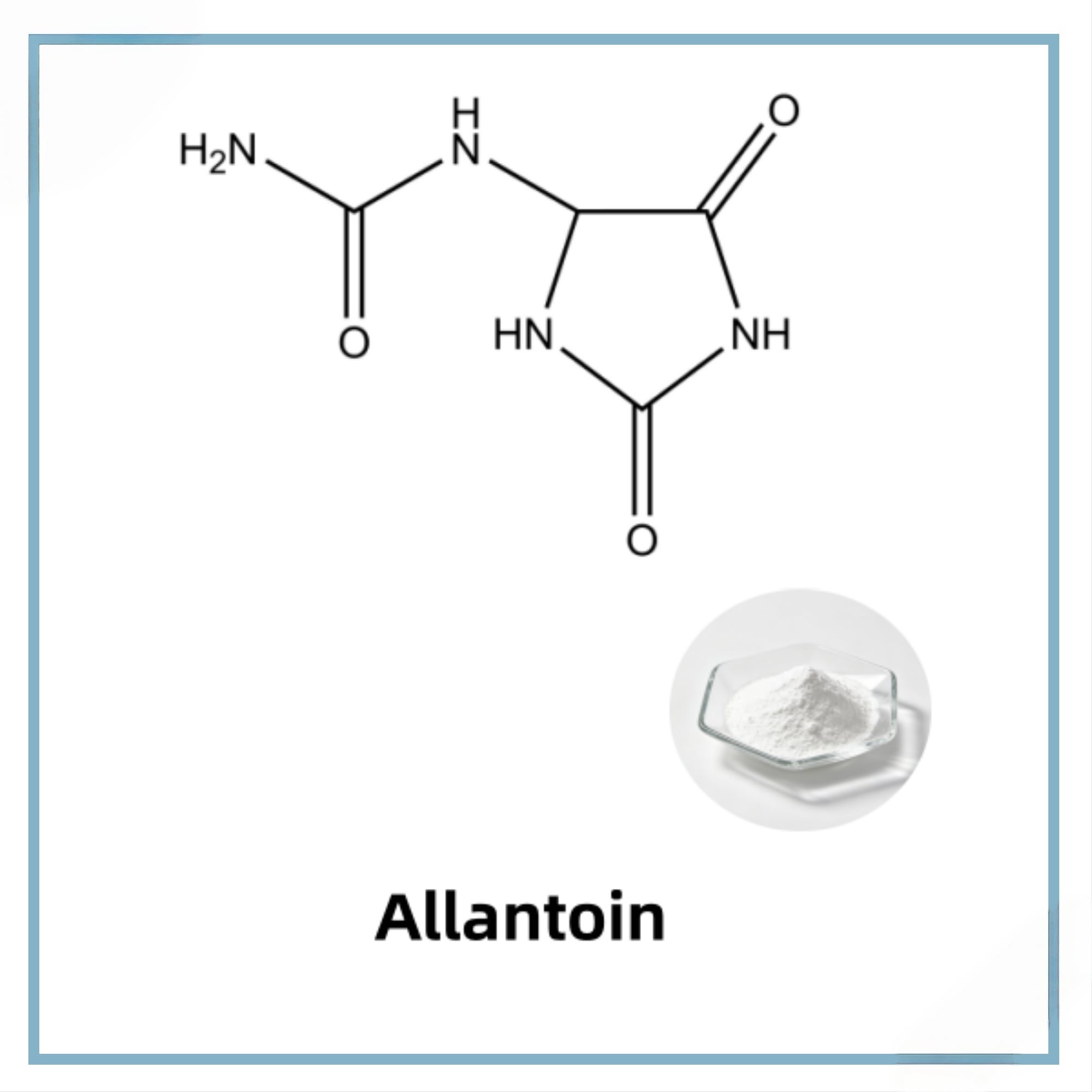
A: The typical usage level ranges from 0.1% to 0.5%. For high-efficacy repairing, soothing and anti-irritant, or special-care formulations, the recommended dosage may be adjusted based on formulation requirements (Note: the safe upper limit is generally up to 2.0%). This raw material is skin-gentle and compatible with most skin types.
Q2: How soluble is Allantoin? Is it easy to handle in formulations?
A: In ambient-temperature water, the solubility of allantoin is approximately 0.5 % at 20°C. It is sparingly soluble in cold water, and soluble in hot water, ethanol and glycerin, while insoluble in ether and chloroform. For practical processing, disperse allantoin in water at 75-80 °C under stirring until fully dissolved, then incorporate the other formulation ingredients. It should be noted that when processing at low formulation temperatures, pre-calculate the water dosage to guarantee full dissolution and prevent crystallization within the finished product.
Q3: Will Allantoin conflict with other active ingredients such as acids, niacinamide or retinol in a formulation?
A: No. Instead, synergistic benefits may be achieved. Allantoin features high stability together with outstanding anti-irritant and soothing properties. It is commonly combined with retinoids, AHAs, BHAs, niacinamide and other actives to reduce irritation and redness and enhance the overall comfort of finished products.
Q4: How may I request free samples for lab testing?
A: We welcome and support formulation testing and provide free laboratory samples to qualified partners with real needs. Generally speaking, the sample itself is free, while the international express shipping, such as DHL or FedEx, is the purchaser’s responsibility. Please provide your shipping address and requirements, and we will arrange dispatch along with complete technical data.
Q5: Does Allantoin impose pH requirements? Is it stable across formulations?
A: Allantoin has excellent chemical stability. It remains stable over a wide pH range from about 3.0 to 8.0, well-suited for most skincare systems on the market, such as mildly acidic toners, neutral creams, mild cleansers. Most importantly, within the recommended pH range, it does not hydrolyze or lose efficacy.
 EN
EN