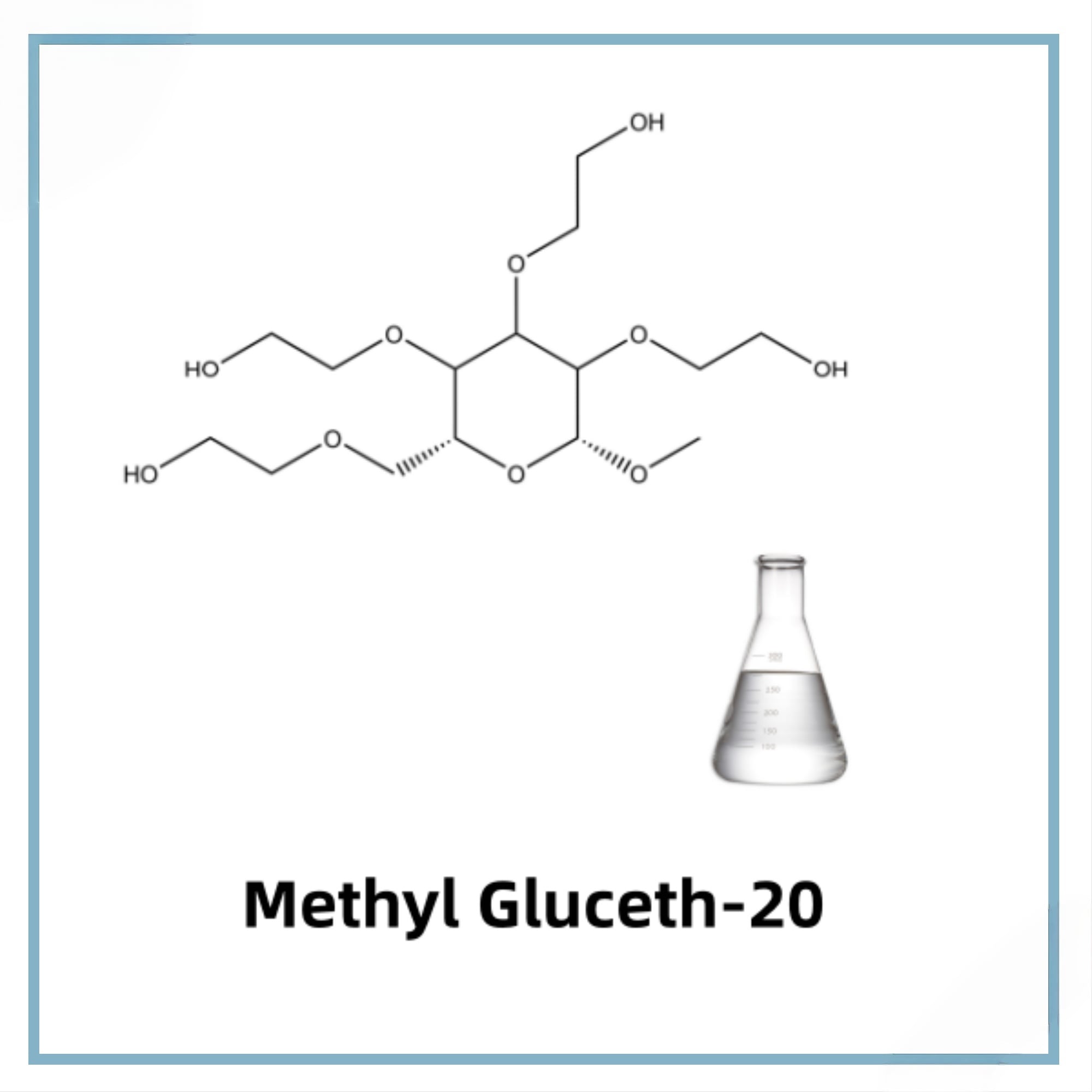
Q1: Compared with conventional glycerin, what is the key competitive strength of Methyl Gluceth-20?
A: Both are excellent moisturizers, but glycerin delivers heavy and tacky skin feel under the high concentrations or specific humidity conditions. In contrast, methyl gluceth-20 has not only the equally outstanding moisturizing and water-locking effects, but also an exceptionally light, smooth, non-tacky satin-like skin feel. Therefore, it is suitable for lightweight, modern luxury skincare products.
Q2: Does Methyl Gluceth-20 exhibit significant irritation potential to the skin and eyes? And can sensitive skin use it?
A: As a low-irritation ingredient and a mild nonionic ingredient, it is gentle to skin and eyes. For this reason, it is suitable for both normal and sensitive skin, and can be used in eye creams, baby care products and mild cleansers.
Q3: In formulations, does Methyl Gluceth-20 affect the product’s foaming properties or form precipitates?
A: No. As a nonionic ingredient with good water solubility, it is stable and hardly diminishes foam richness in surfactant systems. Besides, in the normal cosmetic formulations, it does not prone to separation or precipitate formation. Therefore, it can work together with most anionic, nonionic and amphoteric surfactants.
Q4: In formulations, does Methyl Gluceth-20 deliver a thickening effect?
Its main function is moisturization and skin feel improvement, so it does not deliver a thickening effect when used alone. However, due to its excellent water solubility and compatibility, methyl gluceth-20 does not destroy original thickening structure in system. Therefore, it works perfectly with conventional thickeners such as celluloses and carbomers.
Q5: Does Methyl Gluceth-20 deliver antibacterial or preservative properties?
A: It has no inherent preservative efficacy, so it does not replace preservatives. However, for polyhydric alcohol compounds, due to its characteristics of molecular structure, it does not exert antagonistic effects, while synergistically maintaining the microbiological stability of the system when cooperating with the preservative system.
Q6: Does Methyl Gluceth-20 lead to degradation or loss of efficacy under extreme temperature or pH conditions?
A: Its chemical properties are very stable. At conventional cosmetic manufacturing processing temperatures, it is not degraded, and it also remains stable when the pH ranges from 3 to 10. For this reason, Methyl Gluceth-20 can meet the requirements of acidic toners or slightly alkaline cleansing products.

 EN
EN