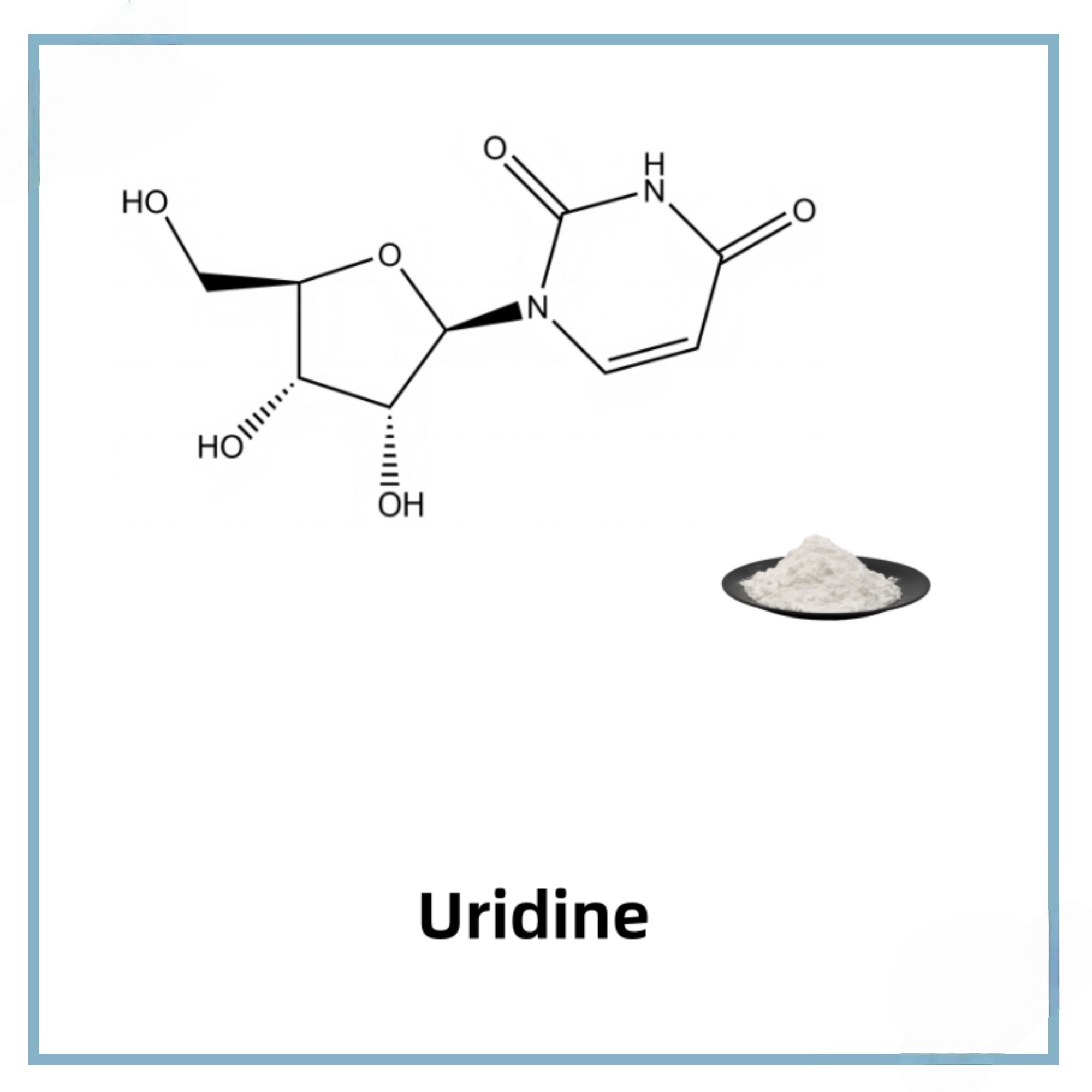
| Product Name | Uridine |
| Purity | 98% |
| CAS No. | 58-96-8 |
| EINECS No. | 200-407-5 |
| Molecular Formula | C₉H₁₂N₂O₆ |
| Molecular Weight | 244.20 |
| Appearance | White crystalline powder |
| Packing | 1kg/5kg Aluminum foil bag 25kg/Drum 25kg/Carton or as per customer's requirement |
| Storage | Store in a cool, dry place, tightly sealed, away from heat and light |
| MOQ | 1KG |
| Payment | T/T, LC or DA |
| Delivery Time | Ready Stock in Local Warehouse, 1-3 days |
| Origin | China |
| Shipping | DHL, FedEx, TNT, EMS, By Sea, By Air |
Uridine is a nucleoside, which made of uracil and ribose by a β-N1-glycosidic bond. As one of the four main components of Ribonucleic Acid (RNA), uridine plays an important role in metabolic regulation within the human body.
1.As a popular raw material in the nootropics market, uridine is usually combined with choline and DHA to promote synapse synthesis, enhance memory and regulate emotion.
2.As a participant in the process of cellular metabolism, uridine is used to enhance the self-repair capacity of skin cells and strengthen the skin barrier in skincare products.
3.Uridine is a starting material to synthesize antitumor and antiviral drugs (such as Floxuridine).
4.As a nucleoside component, uridine is added into infant formulas to mimic breast milk’s ingredients, thereby supporting the development of infant immune systems.
| Test Items | Standard / Enterprise requirement | Result |
|---|---|---|
| Description | White or almost white crystalline powder | Conform |
| Solubility | A 50 mg/mL aqueous solution is a clear and transparent solution | Conform |
| Loss on drying | <0.5% | 0.27% |
| Assay (UV) | 98.0%~101.5% | 99.25% |
| Purity (HPLC) | 99.0% | 99.65% |
| Melting point | 161.0℃~169.0℃ | 166.1℃~168.4℃ |
| Specific Rotation | +6.0~+10.0° | +8.0° |
| Residue on ignition | <0.2% | 0.09% |
| Heavy metals | <10ppm | <10ppm |
| Conclusion:Qualified | ||
1.From a professional perspective, we ensure that the product complies with EU & US fine chemical entry standards by checking specific rotation (Typical specification:[α]D20= +9° ±1° ) and impurity level.
2.Uridine is produced through biological fermentation. With over a decade of dedicated experience in the industry, we have a more acute sense of how fluctuations in the cost of fermentation raw materials affect prices, so we will provide “incisive” purchasing timing suggestions for clients.
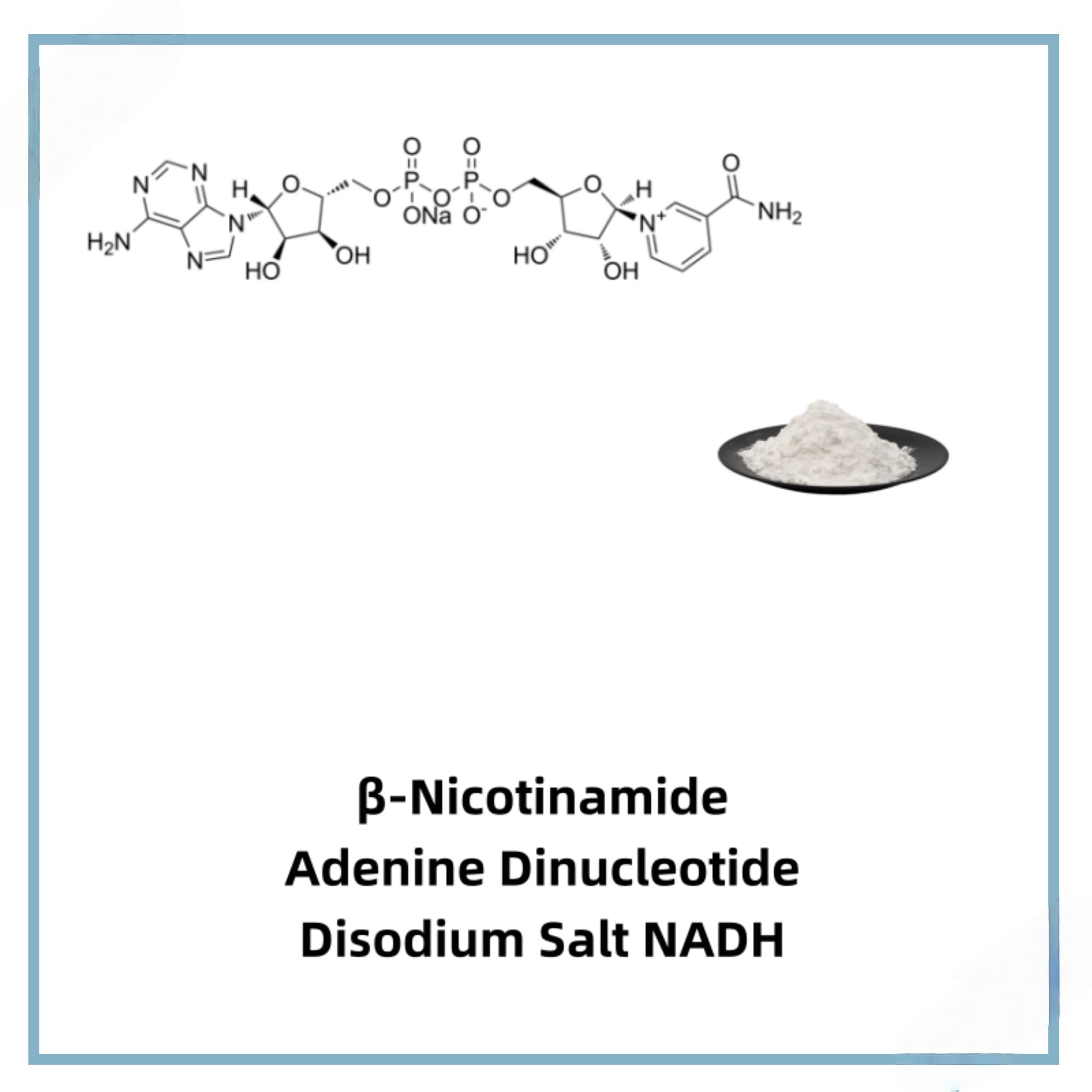
3.Uridine is perfectly combined with MNA, adenosine,cytidine and liposome series to form a comprehensive programme of “cellular repair and anti-ageing”, thereby offering a one-stop purchasing to clients.
Q1: Are uridine and uracil the same thing?
A:No,they are different. Although they share similar names and metabolic links, their chemical structures, bioavailability and downstream applications are different:
Structural Hierarchy Differences(Base vs Ribose):
Uracil as a pyrimidine base, is one of the core constituent monomers of RNA.
Uridine as a nucleoside, is a synthetic product formed when the N1 position of uracil binds to one molecule of D-ribose via a β-glycosidic bond. In short, Uracil is the nitrogenous base moiety of uridine.
Difference between Bioavailability and Metabolic kinetics (Key Challenge):
In dietary supplements and clinical medicine sectors, the oral bioavailability of uracil is very low. The main reason is that uracil is readily degraded and metabolized by dihydropyrimidine dehydrogenase(DPD) in the intestines and liver, making it difficult to enter the systemic circulation or cross the blood-brain barrier in its parent form.
By contrast, uridine contains a ribosyl group and can be transported by nucleoside transporters in vivo. Therefore, it has a much higher oral absorption rate and better plasma stability than uracil. It can effectivelyelevate systemic UTP levels in the human body, cross the blood-brain barrier, and exert potent biological activities to promote synaptic growth, support cognitive function and facilitate cellular repair.
Precise Segmentation of Downstream Application Markets:
As a starting material for synthesizing bulk compounds, uracil is widely used to produce classic antitumor pharmaceutical intermediates such as 5-FU.
Thanks to its excellent bioavailability, uridine is widely applied in nootropic supplements (to promote dopamine release and slow cognitive decline), infant formulas, and the synthesis of novel mRNA nucleic acid drugs such as the preparation of pseudouridine transcription substrates.
Q2: Why is important in nootropics formulations?
A: Uracil is a key precursor in the synthesis of cerebral nerve membrane phospholipids. In the field of fine nutrients, it is often combined with DHA and choline in a “Triple Compound Formula” to work together to promote synaptogenesis. For customers who want find some materials about enhancing memory or preventing cognitive decline, uracil is an indispensable key ingredient. As is well known, the technical barriers in this market segment are so challenging, therefore, we are able to offer raw material plans with the highest bioavailability.
Q3: Does uridine meet the safety standards for skincare products?
A: Absolutely! Our uridine has extremely high purity (≥99%) and low heavy metal content. In the application of skincare products, it is considered that they can enhance skin self-repair capacity and optimize energy metabolism. Though the bio-enzymatic production process that prevents solvent residue issues in the traditional chemical production processes, so our products fully meet the stringent requirements of premium skincare brands regarding the “purity”of ingredients.
Q4: How is the stability of uridine? And what precautions should be taken during transport?
A: Uridine is very stable at normal temperatures. In order to ensure the quality of uridine during the international long-distance transport, we will use double-layer PE bag plus vacuum aluminium foil bag that meets the standard packing to pack each product, and what’s more, we recommend storing it in a cool, dry and sunlight-free place. Most importantly, we also have a well-established closed-loop system of temperature control and moisture-proof treatment in fine ingredients.
Shandong Fulibai specializes in providing high-quality raw materials for the nutritional and cosmetic industries.
Floor 13, Block 1, No. 6888, Jiankang East Street, Weifang High-tech Zone, Shandong Province, China.
Copyright © 2026 SHANDONG FULIBAI CHEM CO.,LIMITED. All rights reserved. Privacy Policy
 EN
EN