Q1: Is your hydrolyzed keratin liquid or powder? What is the typical molecular weight?
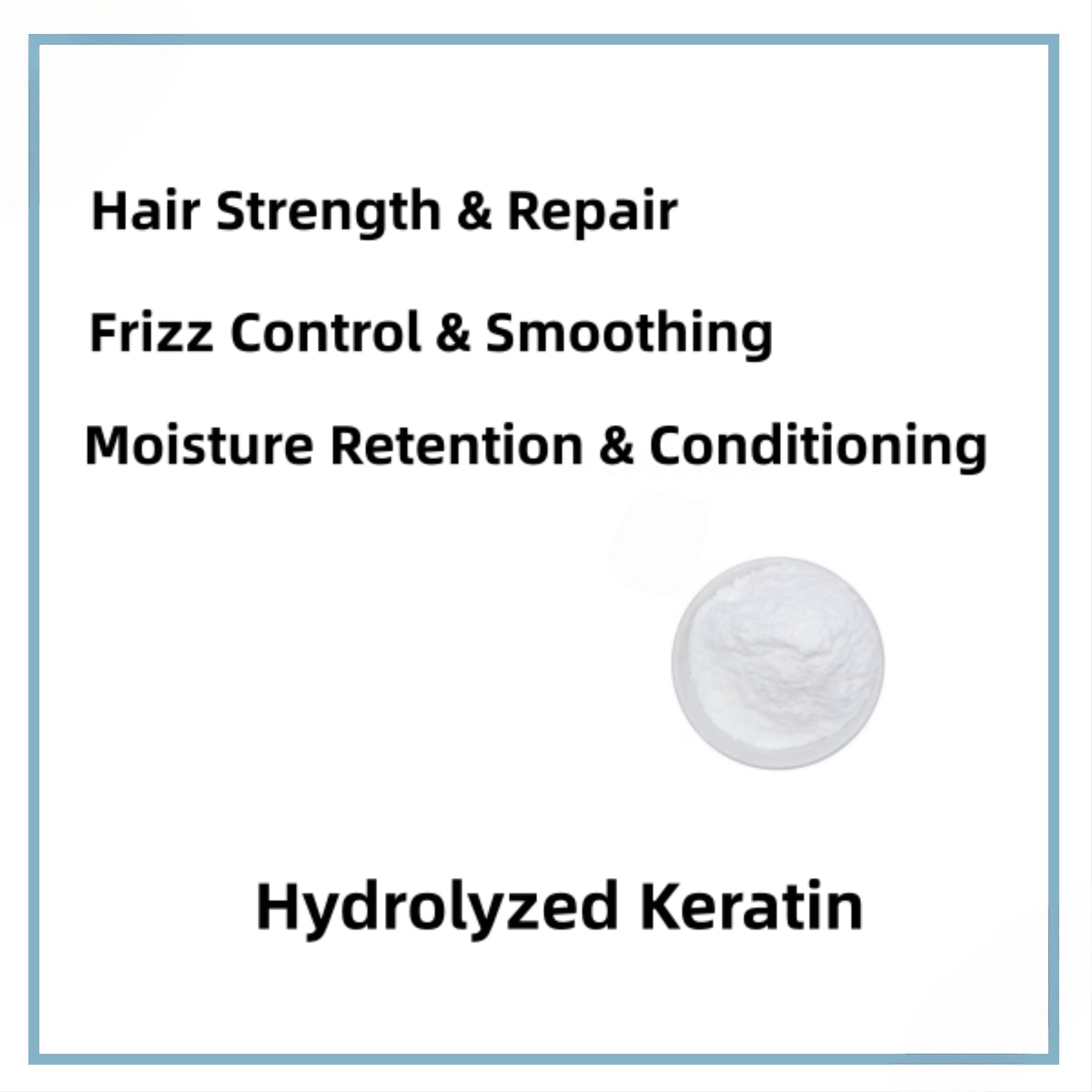
A: It is available in both liquid and powder forms. The typical liquid is a pale‑yellow‑to‑amber transparent solution with 20%–30% solids content; the powder is a high‑purity, light‑colored, water‑soluble solid. Molecular‑weight profiles can be precisely tailored to customer requirements, for example, low‑molecular‑weight fractions for deep penetration into the hair cortex and high‑molecular‑weight fractions focused on surface film formation.
Q2: Are there any temperature or pH limitations to consider when used this raw material into formulas?
A: Hydrolyzed keratin is easily soluble in water and easy to use. It is recommended to add it during the formulation’s cooling stage, generally when the temperature is below 40°C–50°C to avoid prolonged exposure to high temperatures that could impair protein activity. For pH value, it is stable in the range of 4.0–7.0 for typical cosmetic systems.
Q3: Could long-term use of washing-hair products containing hydrolyzed keratin lead to “protein overload” or hair stiffening?
A: When the dosage is kept within 0.5%-5.0% with scientifically designed formulations, no protein overload will occur. Furthermore, our hydrolyzed keratin features a uniform molecularweight distribution. It can precisely fill the damaged hair cortex and deliver good hydrophilic moisturizing performance, keeping hair soft and glossy without stiffness.
Q4: Can hydrolyzed keratin be fully compatible with surfactants or cationic conditioners?
A: Yes. Hydrolyzed keratin shows excellent compatibility and can coexist with common anionic, amphoteric and nonionic surfactants. Furthermore, when combined with cationic conditioning agents, it exerts synergistic effects without triggering flocculation or precipitation.
Q5: In addition to hair care products, what benefits can hydrolyzed keratin bring to skin anti-aging or moisturizing products?
A: In skincare products, hydrolyzed keratin can form a breathable, lightweight moisturizing protective layer on the skin surface through its amphoteric film‑forming properties. It reduces transepidermal water loss, improves long‑lasting hydration and delivers a silky, firmer skin feel, making it especially suitable for creams and body lotions for dry and mature skin.
Q6: If customers encounter solubility, foaming, or compatibility issues during lab sampling, can you provide technical support?
A: Yes. We provide dedicated technical support backed by our professional formulation R&D team.Therefore, should you encounter any technical challenges, such as addition order, pH compatibility or synergy with other active ingredients,please contact our technical team for support, we are ready to provide detailed formulation guidance and solutions.
 EN
EN