Applications
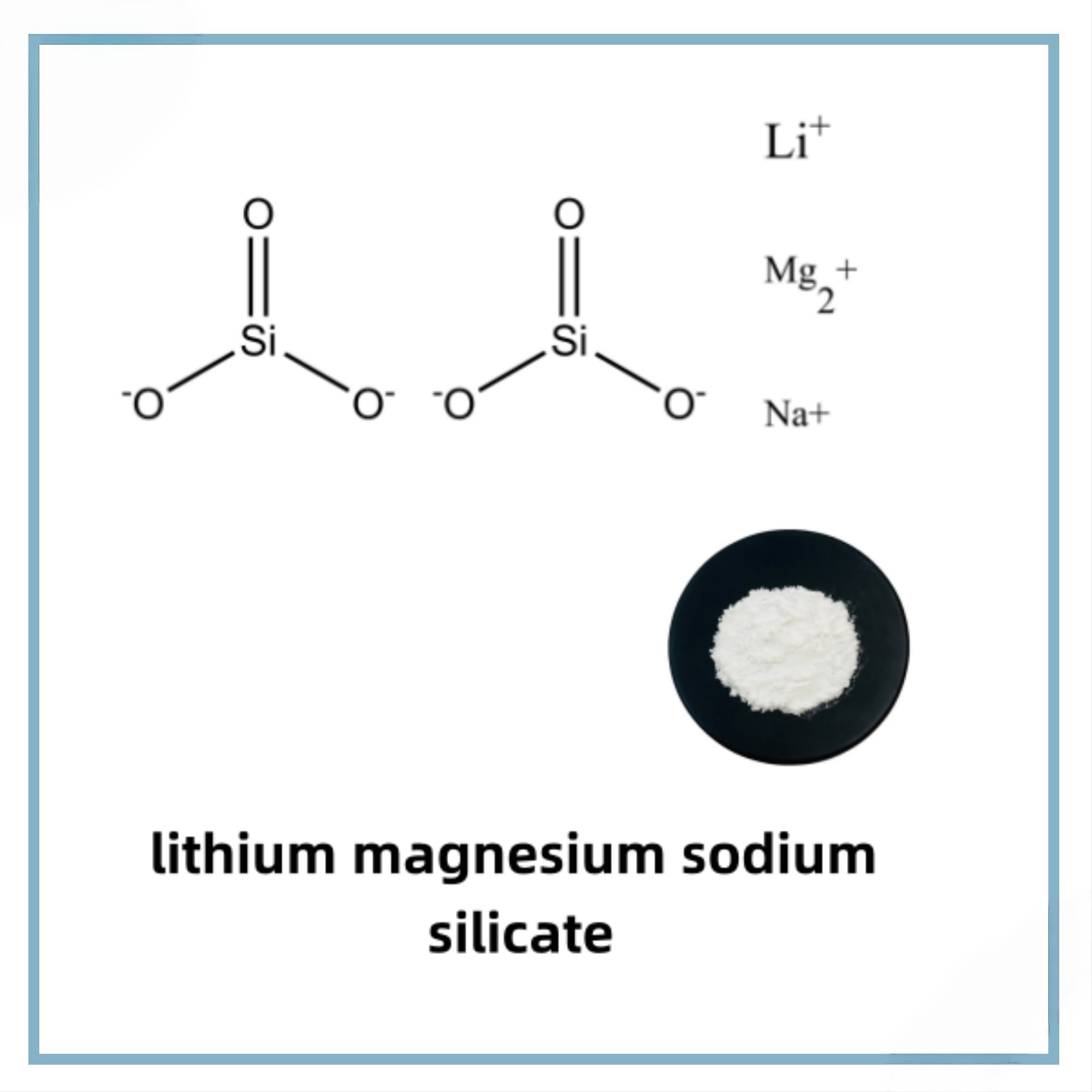
In the field of thixotropy and thickening performance, after swelling in water, it forms highly transparent, high-viscosity nanoscale colloids. When subjected to shear force such as shaking, extrusion or spreading, its viscosity drops rapidly for outstanding fluidity. Once at rest, viscosity recovers quickly to prevent phase separation of the system.
In the field of suspending and emulsifying stabilizing capacity, it delivers effective suspension of insoluble particles, pigments and fine pearlescent agents within formulations and inhibits sedimentation or oil-water separation throughout storage.
In the field of refreshing, mild sensory profile, compared with certain conventional organic thickeners, it boasts great biocompatibility and gentleness. Therefore, it delivers a smooth, non-tacky feel and is non-irritating to the skin and eyes.
Suspension and Makeup Products
Liquid Foundation, BB & CC Creams: Lithium magnesium sodium silicateis added to suspend fine pigments and powder particles, in order to prevent powder sedimentation or agglomeration during long-term storage and ensure a uniform product texture.
Pearlescent shampoos and body washes: It helps suspend pearlescent agents including glycol distearate, delivering attractive shimmer flow patterns within liquid systems and avoiding sedimentation at the bottom.
Skincare and Hydrogel Products
Transparent toner, essence and gel: As a rheology modifier, it imparts a refreshing and crystal-like texture to the product, and can instantly reduce viscosity upon application, providing excellent spreadability. Clay Facial & Cleansing Masks: It is a core thickener and thixotropic agent in mineral clay masks, ensuring that clay facial masks are easy to spread, with good wall adhesion and anti-dripping performance.
Toothpastes: It functions as a suspending agent for abrasives and a formulation thickener, improving extrudability and body formation of the paste.
0.5% to 3.0%. Note: according to target viscosity requirements and loading of powders or solid particles in system.
If you use it in partial suspension or thickening in lightweight serums or toners, the typical dosage is from 0.5% to 1.0%.
If you use it in clay facial marks or makeup products of high-pigment, the typical dosage is from 2.0% to 3.0%. Advantages
1.Nanoscale Purity and Consistent Quality: We strictly control crystal form, particle size distribution and purity specifications to ensure consistent swelling performance, transparency and thixotropy across all batches, enabling it to meet stringent standards for stability and rheological sensory properties in premium cosmetics.
2.Large-scale Production Capacity and In-stock Supply Guarantee With the help of established manufacturing facilities, we possess stable mass production and sufficient inventory,ensuring smooth inventory turnover. Besides, we can also efficiently fulfil bulk orders from domestic and global clients to ensure on-time delivery and secure supply chains.
3.Technical Support and Customized Services: Beyond supplying high-quality raw materials, we offer targeted rheology solutions and custom specification support to address formulation challenges encountered by downstream customers, including sedimentation, phase separation and sensory adjustment issues.
4.Comprehensive Compliance & Global Export Qualifications We provide a complete portfolio of compliance documents, including bilingual TDS, MSDS and COA. These documents help domestic and overseas clients pass rigorous raw material compliance assessments efficiently.
FAQ
Q1: Compared with conventional polymeric thickener, such as Carbomer, Xanthan Gum, what is the key competitive advantage of Sodium Magnesium Silicate?
A: Firstly, it has excellent thixotropy. In other words, it presents a high viscosity gel state when at rest to prevent flow, and its viscosity rapidly and easily decreases when squeezed or applied. Secondly, it delivers excellent electrolyte tolerance. Because it is insensitive to salt, such as irons from active ingredients and preservatives, it does not lose water or “collapse” like Carbomer when encountering salts. Thirdly, it performs more lighter, fresher sensory.
Finally, its transparency is very high. High-quality synthetic lithium magnesium silicate can achieve over 99% transmittance after dispersion, not affecting the crystalline appearance.
Q2: In the formulation production, how should lithium magnesium sodium silicate be correctly used and dispersed?
A: The correct dispersion process is key to leveraging its effectiveness. For example, in the process of pre-dispersion and hydration, this raw material should be slowly added into deionized water with the condition of high-speed stirring. Continue high-shear mixing for a set duration, making it adsorb abundant water, become swell, and peel into nanosheet layers. (Note: Hot or warm water helps accelerate hydration). Given that usage level, the recommended usage is from 0.5% to 3.0%. Most importantly, the usage level should be based on the required viscosity and suspension. For pH value, it shows optimal gel performance and stability in a neutral to mildly alkaline environment (pH 7-11).
Q3: What precautions should be taken when using this raw material?
A: First, incomplete dispersion leads to “graininess”. In detail, if the stirring shear force is insufficient, the nanosheet layers will not fully separate, leaving a gritty or speckled sensation in the gel or final product.Secondly, in the field of pH compatibility, you should be careful when used in strongly acidic formulations. Besides, a low pH value may affect its charge balance and gel network structure.In a compatibility testing, although it delivers excellent electrolyte tolerance, it should be conducted preliminary compatibility and thermal stability testing in high concentrations of cationic surfactants or specific strong polar systems to prevent flocculation.
Q4: How does this raw material perform in terms of environmental friendliness and safety?
A: lithium magnesium sodium silicatefalls within the category of inorganic mineral synthetic derivatives (silicate), delivering high biocompatibility. In detail, due to its non-toxic and non-irritating, it is gentle on skin and eyes and not cause allergies. Besides, it is an environmentally friendly raw material with low pollution impact and does not accumulate in the environment. As a result, it complies with current trends in green cosmetics and clean beauty regarding raw material safety and sustainability.
Q5: How can one quickly assess or test the quality of a batch of lithium magnesium sodium silicate raw materials?
A: The following are the core indicators:
Firstly, in the aspect of transmittance or transparency, when this ingredient is formulated into gels at a standard ratio, such as 2% aqueous solution, use a spectrophotometer or visual inspection to observe transmittance. Gels that contains high-quality raw materials should be crystal clear, without black spots, impurities, or undissolved particles.
Secondly, in the aspect of whiteness, the whiteness of the powder itself usually needs to be above 90. The higher the whiteness, the greater the mineral purity and the more advanced the refining processes.
Thirdly, in the aspect of swelling rate and viscosity, under the same stirring conditions, observe the rate at which it absorbs water and forms a stable thixotropic gel, as well as the final viscosity value.
Q6: Can it be compounded with other thickeners, such as cellulose, xanthan gum and carbomer? What advantages does that provide?
A: It is very suitable for compounding and often produces a "1+12" synergistic effect.
When natural polysaccharide polymers such as xanthan gum and cellulose are incorporated in formulations, they readily create a stringy or sticky sensation. The addition of lithium magnesium sodium silicate effectively removes stringiness, delivering pastes with a fresher feel and short flow, while substantially boosting suspension performance.
When carbomer and lithium magnesium sodium silicate are compounded in formulations, dosage of carbomer can be greatly lowered, while its performance limitations under electrolyte-containing conditions are overcome. Therefore, the overall skin feel will be optimized.
Regulatory compliance
China: It is a conventional raw material in the list of cosmetics (IECIC) that is already on the market, and does not require independent registration as a new raw material; it can be directly used in formulations. Most importantly, it must strictly comply with the China’s Safety and Technical Standards for Cosmetics (2015 Edition) for the limits of heavy metals, such as lead, arsenic, cadmium, mercury.
EU: Silicate raw materials have a mature safety assessment history in the EU, such as CIR or SCCS systems. However, if the product involves “Nanomaterials”, full notification of nano status must be submitted via the EU CPNP portal, and this ingredient shall be labelled accordingly within the ingredient list. It delivers micro-nano sheet structures, so it must comply with the above requirement.
United States: It is a conventional cosmetic raw material in the United States. What’s more, CIR-Cosmetic Ingredient Review is supported by completed safety assessments, which consider it safe at conventional usage concentrations.
Canada: It is a conventional cosmetic raw material in the Canada, and not ahazardous ingredients that are prohibited or subject to strict restrictions.
Australia: As a regular industrial or commercially introduced chemical, it has a legal status in Australia.
Japan: As a regular chemical listed in Japan's "Chemical Substance Control Law" (CSCL), it is allowed for import and industrial use within a compliant legal framework, and does not need to apply for lengthy, high-cost pre-market safety assessments as a "new chemical substance."

 EN
EN